Executive Summary
The AI Project Pre-Commitment Readiness Scoring Grid is a structured decision-support tool for assessing whether an AI initiative has the foundations needed to proceed beyond initial screening and into detailed investment evaluation. It is designed to be used after the Resource 06 Quick Health Checklist has passed and before the full investment case is developed in Resource 08.
The workbook assesses ten dimensions of readiness: Problem-Value Fit, Data Readiness, ROI Definition and Measurability, Executive Sponsorship, Workflow Integration, Build Scope and Realism, AI and Data Talent, Regulatory and Ethical Risk, Change Management and Adoption, and Strategic Fit and Portfolio Priority. Each dimension is scored as 2 - Healthy, 1 - Caution, or 0 - Stop. The workbook then calculates the number of Healthy, Caution, and Stop scores and returns one of three verdicts: Ready, Conditional, or Not Ready.
The verdict is not based on a weighted average or on a threshold applied to the total score out of 20. It is based on the count and combination of Stop and Caution scores. This distinction is important. A high total score does not automatically mean the initiative is Ready, and a serious weakness cannot simply be offset by strong scores elsewhere.
The workbook adds value by turning a rapid health screen into a consistent pre-commitment gate. It helps a cross-functional team expose weak assumptions, identify unresolved foundations, define controlled mitigations, and create a clear handoff into the investment and lifecycle decision process. It does not replace a business case, technical assessment, legal or compliance review, data-quality assessment, financial model, or accountable human decision.
The workbook is intentionally compact. Score cells are restricted to whole-number entries from 0 to 2, and calculated cells, the published rubric, and workbook structure are protected. The workbook does not provide fields for evidence, rationale, mitigation actions, owners, dates, approvals, or version history. Users must therefore document evidence and mitigations in an approved register and retain a dated assessment record.
Used with these controls, Resource 07 provides a practical bridge between early business-case screening and full investment evaluation. It helps decision-makers answer a necessary question before committing substantial resources: Are the foundations strong enough to proceed, and if not, what must be resolved first?
1. Purpose and Position in the AIPM Toolkit
1.1 Purpose of Resource 07
Resource 07 provides a repeatable way to evaluate whether an AI initiative is sufficiently ready for detailed investment modelling and potential commitment. It changes readiness from a broad discussion into a visible, structured assessment supported by defined scoring criteria.
The tool is intended to help practitioners:
- test whether the initiative is grounded in a measurable business problem;
- assess whether the required data, capabilities, workflows, governance, and adoption conditions are sufficiently developed;
- expose assumptions that remain unsupported;
- distinguish manageable gaps from conditions that should stop or delay commitment;
- assign controlled actions to unresolved Caution and Stop conditions;
- support a PMO, Finance, investment committee, or governance gate review; and
- pass a standardized readiness verdict into Resource 08.
The workbook is not an approval by itself. It produces decision evidence for the person or body authorized to approve, condition, defer, or reject further commitment.
1.2 Position in the three-resource investment sequence
Resources 06, 07, and 08 form a connected sequence while remaining usable as modular references.
| Stage | Resource | Primary question | Output |
|---|---|---|---|
| Initial screening | Resource 06 - AI Project Business Case Quick Health Checklist | Is the idea sufficiently healthy to justify deeper assessment? | Green, Yellow, and Red signals across the initial business-case checks |
| Pre-commitment readiness | Resource 07 - AI Project Pre-Commitment Readiness Scoring Grid | Are the business, data, organizational, governance, and commercial foundations strong enough to proceed? | Ready, Conditional, or Not Ready |
| Investment and lifecycle decision support | Resource 08 - AI Investment Case and Lifecycle Decision Workbook | Is the investment financially and operationally defensible, and does it remain so over time? | Investment case, lifecycle cost and benefit evidence, KPI status, recommendation, and recorded human decision |
Resource 06 should filter out proposals with fundamental defects before a more detailed assessment is undertaken. Resource 07 then examines the strength of the remaining foundations. Resource 08 develops the full cost, benefit, ROI, scenario, evidence, and lifecycle decision view.
Passing Resource 06 does not mean the initiative is ready for commitment. Passing it means that a deeper readiness assessment is justified. Similarly, a Ready or Conditional verdict from Resource 07 does not constitute final funding approval. It means the readiness evidence can proceed into the wider investment decision, subject to the conditions and controls documented by the accountable decision-maker.
1.3 What Resource 07 does not replace
Resource 07 does not replace:
- a complete AI business case;
- a technical feasibility study or architecture review;
- a data-quality, data-rights, or data-governance assessment;
- model validation, testing, assurance, or independent review;
- privacy, security, legal, regulatory, or ethical approval;
- procurement, vendor due diligence, or contract review;
- organizational change and adoption planning;
- lifecycle cost, benefit, ROI, and affordability analysis;
- formal stage-gate authority; or
- accountable human judgment.
The scoring grid should summarize and challenge the available evidence, not substitute for evidence that does not yet exist.
2. What the Tool Offers
2.1 A disciplined pre-commitment conversation
AI initiatives often appear attractive before their basic conditions are understood. Enthusiasm for the technology may precede agreement on the problem, access to usable data, ownership of the outcome, workflow redesign, or a credible route to value. Resource 07 creates a common structure for discussing these conditions before significant funds, contracts, or organizational commitments make the initiative harder to change or stop.
The tool is most valuable when the scores are agreed through evidence-based discussion rather than entered by one person in isolation. The scoring criteria create a shared language across business, project, technical, financial, risk, and change stakeholders.
2.2 More than a total score
The workbook produces a total score out of 20, but the total is descriptive rather than decisive. The verdict formula uses the number of Stop and Caution scores. A total of 18 can therefore be Ready or Conditional depending on how the score is composed.
This approach recognizes that readiness is not simply additive. Two initiatives with the same total score may have materially different risk profiles. One may contain a manageable Caution, while the other contains a Stop condition that requires escalation.
2.3 A controlled alternative to premature approval
The three verdicts support more useful governance than a simple yes/no decision:
- Ready indicates that no Stop conditions exist and no more than one Caution remains.
- Conditional indicates that material gaps remain but may be managed through explicit controls, owners, dates, and decision conditions.
- Not Ready indicates that the weakness pattern is too serious for commitment and requires rework before resubmission.
Conditional must not become a convenient label for proceeding without resolution. Its value depends on disciplined mitigation and accountable approval.
2.4 A handoff into investment and lifecycle decisions
Resource 07 provides two important inputs to Resource 08:
- the overall Business Case Readiness Verdict; and
- the Problem-Value Fit score.
In Resource 08, these inputs form part of the hard-gate evidence used alongside cost, benefit, ROI, adoption, and performance information. Resource 07 therefore complements the wider toolkit by linking pre-commitment foundations to later financial and lifecycle decisions.
3. When to Use the Workbook
3.1 Entry conditions
Use Resource 07 only after Resource 06 has been completed and its entry conditions have been satisfied. At minimum:
- no unresolved Red condition remains in the Quick Health Checklist;
- every Yellow condition has a documented mitigation and named owner;
- the initiative has a sufficiently defined business problem and proposed outcome;
- a Value Owner or accountable sponsor has been identified;
- initial evidence is available for the ten readiness dimensions; and
- the assessment team understands that Resource 07 precedes, rather than replaces, detailed investment modelling.
If these conditions are not met, return to Resource 06 or business-case definition rather than forcing a Resource 07 score.
3.2 Appropriate decision points
Resource 07 can support:
- concept or idea-gate review after initial screening;
- authorization to develop a full business case;
- pre-procurement or pre-vendor-commitment review;
- pre-pilot funding review;
- PMO portfolio-entry review;
- Finance or investment committee challenge;
- reassessment after a material change to the proposed use case; and
- comparison of alternative AI initiatives, provided the same evidence and scoring discipline are used.
3.3 When not to use it as the sole basis for a decision
Do not use the workbook alone to:
- approve deployment or go-live;
- certify technical, security, legal, or regulatory compliance;
- select a vendor;
- confirm a financial return;
- justify continuation because money has already been spent;
- compare projects scored by materially different standards; or
- override an unresolved critical finding from a qualified assurance function.
3.4 Exit conditions
The Resource 07 assessment is complete only when:
- all ten score cells contain a valid 0, 1, or 2;
- the evidence supporting each score has been reviewed;
- the Healthy, Caution, and Stop counts reconcile to ten;
- every Caution and Stop has an action disposition;
- required owners, due dates, and approval conditions are recorded outside the scoring grid;
- the verdict has been reviewed by the appropriate authority;
- a dated, version-controlled copy has been retained; and
- the approved readiness inputs have been transferred to Resource 08 when the initiative proceeds.
4. Roles, Participation, and Evidence
4.1 Recommended roles
| Role | Recommended contribution |
|---|---|
| Business lead or project manager | Coordinates the assessment, prepares the evidence pack, facilitates scoring, records actions, and maintains the decision record |
| Value Owner or accountable sponsor | Confirms the business problem, outcome, budget authority, strategic priority, and conditions under which the initiative should stop |
| Finance representative | Challenges financial impact, ROI measurability, affordability, assumptions, and the consequences of readiness gaps |
| PMO or governance representative | Ensures consistent scoring, appropriate gate use, proportionate assurance, and complete records |
| Data owner or data lead | Confirms data availability, quality, ownership, access, lineage, permitted use, and remediation effort |
| AI, architecture, or engineering lead | Confirms technical feasibility, scope realism, skills, dependencies, and resource requirements |
| Process owner | Confirms workflow design, operational integration, human review, controls, and acceptance requirements |
| Legal, privacy, security, compliance, or risk specialists | Assess applicable obligations and whether required controls and approvals are defined |
| Change and adoption lead | Confirms stakeholder readiness, training, communications, adoption planning, and resistance management |
| Investment committee or authorized governance body | Reviews the evidence and verdict, accepts or rejects conditions, and records the accountable decision |
Not every initiative requires every role at the same level of involvement. Participation should be proportionate to complexity, risk, financial exposure, and the consequences of error. However, a single sponsor should not score specialist dimensions without input from the relevant evidence owners.
4.2 Evidence standard
Evidence used for scoring should be:
- specific to the proposed use case rather than based on general organizational capability;
- current enough to support the decision date;
- traceable to a document, analysis, owner, system, or approved source;
- sufficient to distinguish Healthy, Caution, and Stop;
- consistent with the business case and other toolkit resources;
- reviewable by an independent or authorized stakeholder; and
- qualified where assumptions, estimates, or uncertainty remain.
Examples of evidence include a quantified problem statement, baseline data, data profiling results, an approved strategy reference, a named sponsor with documented authority, workflow maps, resource plans, risk assessments, compliance opinions, training plans, and financial assumptions.
4.3 Evidence pack
Prepare a short evidence pack before the scoring meeting. It should contain or link to:
- initiative title, identifier, owner, and proposed decision;
- the completed Resource 06 checklist;
- problem statement and measurable baseline;
- intended users, process, and AI output;
- initial data assessment;
- ROI assumptions and success measures;
- proposed scope, timeline, team, and vendor involvement;
- workflow and adoption considerations;
- legal, privacy, security, ethical, and regulatory findings; and
- known gaps, dependencies, and unresolved decisions.
The workbook itself does not store this evidence. The organization should maintain it in the approved business-case repository, project record, or governance system.
5. Workbook Structure and User Inputs
5.1 Read Me tab
The Read Me tab explains the workbook’s purpose, sequence, scoring conventions, verdict conditions, and position in the three-step AI investment framework. Use it to orient participants before scoring.
5.2 Playbook-Overview tab
The Playbook-Overview explains why a scored assessment adds value after the Quick Health Checklist and describes the intent of the ten dimensions. It also emphasizes two principles:
- scores are additive, but the verdict is not based on an average; and
- a Caution requires mitigation, not merely a note.
The tab also discusses how unresolved readiness gaps can affect cost. The current workbook gives examples of those relationships but does not contain the research-source or cost-taxonomy columns referenced in parts of the explanatory text. Use the current visible grid as the authoritative workbook structure and document cost implications in the investment model or supporting evidence.
5.3 AI Project Readiness tab
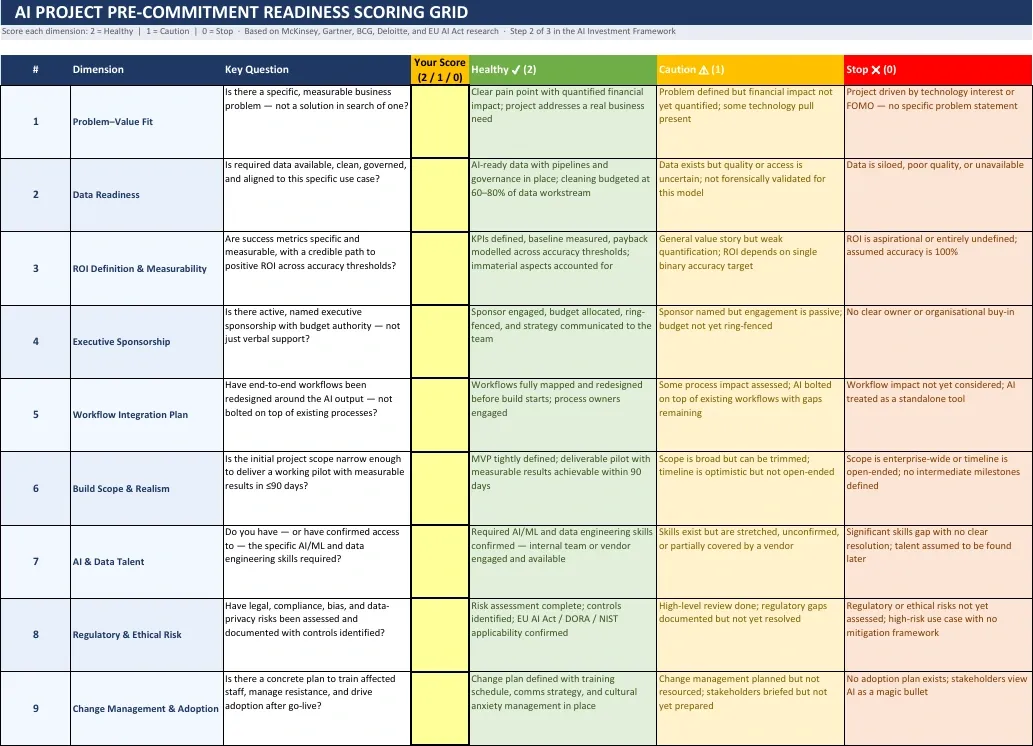
Figure 1. Resource 07 scoring grid, Dimensions 1-9.
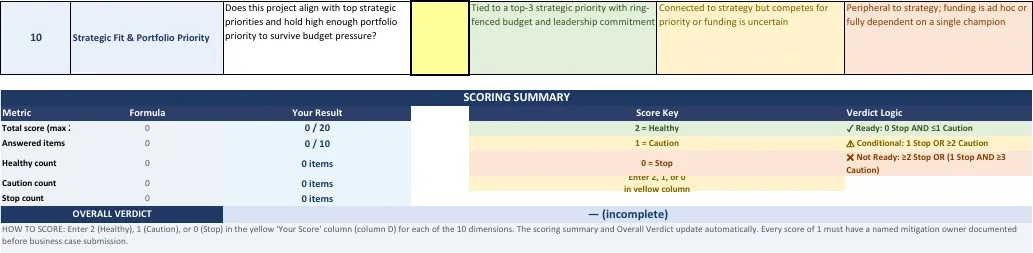
Figure 2. Resource 07 Dimension 10 and calculated scoring summary.
This is the working assessment sheet. It contains:
| Column | Content |
|---|---|
| A | Dimension number |
| B | Dimension name |
| C | Key question |
| D | Your Score - the only intended manual score input, using 2, 1, or 0 |
| E | Healthy criteria - score 2 |
| F | Caution criteria - score 1 |
| G | Stop criteria - score 0 |
Enter scores only in the yellow cells D5:D14. The scoring summary calculates the total, answered items, and counts of Healthy, Caution, and Stop scores. It then displays the overall verdict.
5.4 Disclaimers tab
The Disclaimers tab contains Resource 07 licensing and general-use limitations. Users should follow the finalized publication wording applicable to the controlled Toolkit release in use.
5.5 Important input-control note
The current workbook does not apply Excel data validation to D5:D14. It does not prevent a user from entering text, a decimal, or a number other than 0, 1, or 2. Because the completeness calculation uses COUNTA, any nonblank entry may be treated as answered even when it is not counted as Healthy, Caution, or Stop.
Before relying on the verdict:
- confirm every score is exactly 0, 1, or 2;
- confirm Healthy + Caution + Stop = 10;
- investigate any total score outside 0-20;
- do not edit the calculation cells; and
- have a second reviewer complete the input and formula check.
Where organizational control permits, add a data-validation list containing only 0, 1, and 2, unlock only the intended input cells, and protect the formula cells. These are compensating controls; they do not change the scoring methodology.
6. The Ten Readiness Dimensions
6.1 Problem-Value Fit
Question: Is there a specific, measurable business problem, rather than a solution in search of one?
A Healthy score requires a clear pain point with a quantified impact and a credible connection between the problem and the proposed initiative. A Caution indicates that the problem is recognized but its impact is not yet sufficiently quantified or the proposal is partly driven by technology interest. A Stop indicates that the initiative is primarily driven by AI enthusiasm, fear of missing out, or a vague improvement narrative without a defined problem.
Useful evidence includes the problem statement, affected process or customer group, baseline performance, quantified impact, non-AI alternatives considered, and the conditions that would invalidate AI as the preferred response.
6.2 Data Readiness
Question: Is the required data available, usable, governed, and appropriate for this specific use case?
A Healthy score requires evidence that the needed data is accessible, sufficiently clean, governed, and supported by realistic data-preparation effort. A Caution indicates that data exists but its quality, access, rights, completeness, lineage, or suitability remains uncertain. A Stop indicates that essential data is unavailable, materially unreliable, siloed without a credible access route, or not legally or operationally usable.
Data readiness should be assessed for the proposed use case, not inferred from the existence of an enterprise data platform. Relevant evidence may include profiling results, ownership, permissions, lineage, quality thresholds, labeling requirements, retention conditions, and estimated remediation costs.
6.3 ROI Definition and Measurability
Question: Are success measures specific and measurable, with a credible route to positive value across realistic performance levels?
A Healthy score requires defined KPIs, a measured baseline, clear benefit logic, and financial assumptions that account for uncertainty and different performance thresholds. A Caution indicates a plausible value story with weak quantification or excessive dependence on a single accuracy assumption. A Stop indicates aspirational or undefined ROI, an absent baseline, or success assumptions that depend on perfect performance.
This dimension tests the quality of the value hypothesis, not final financial approval. Resource 08 should complete the lifecycle cost, benefit, ROI, scenario, and affordability analysis.
6.4 Executive Sponsorship
Question: Is there active, named sponsorship with sufficient authority and accountability?
A Healthy score requires an engaged sponsor or Value Owner, visible commitment, defined authority, and credible budget support. A Caution indicates that a sponsor is named but passive, lacks clear financial accountability, or has not secured funding. A Stop indicates that no accountable owner exists or organizational support is too weak to sustain the initiative.
Evidence should distinguish verbal advocacy from accountable ownership. It should identify who owns the outcome, who can authorize resources, who can stop the initiative, and who remains accountable after implementation.
6.5 Workflow Integration Plan
Question: Have end-to-end workflows been designed around the AI output rather than treating AI as a stand-alone add-on?
A Healthy score requires mapped processes, identified handoffs, human review points, exception handling, controls, and engaged process owners. A Caution indicates partial process analysis with unresolved integration gaps. A Stop indicates that operational impact has not been considered or that the initiative is treated as a stand-alone technical tool.
The assessment should address what changes before, during, and after the AI output; who reviews or acts on it; what happens when the output is uncertain or wrong; and how the process continues during failure, interruption, or withdrawal.
6.6 Build Scope and Realism
Question: Is the initial scope narrow and realistic enough to produce measurable evidence within an appropriate time?
The workbook uses a working pilot achievable within 90 days as its Healthy anchor. A Caution indicates that scope or timing remains optimistic but can be reduced. A Stop indicates enterprise-wide or open-ended scope without meaningful intermediate milestones.
The 90-day anchor should be interpreted as a discipline for limiting initial exposure, not as a universal rule for every regulated, safety-critical, or technically complex initiative. If an organization adopts a different time anchor, the change should be approved, documented, and applied consistently.
6.7 AI and Data Talent
Question: Are the required AI, data, engineering, operational, and oversight capabilities confirmed and available?
A Healthy score requires confirmed access to the skills and capacity needed for delivery and operation, whether internal or provided by an engaged vendor. A Caution indicates partial coverage, stretched resources, or unconfirmed availability. A Stop indicates a material capability gap with no credible resolution.
Assessment should include more than model development. Consider data engineering, architecture, security, product or process knowledge, testing, monitoring, human review, change, vendor management, and ongoing support.
6.8 Regulatory and Ethical Risk
Question: Have applicable legal, regulatory, privacy, security, bias, and ethical risks been assessed and have necessary controls been identified?
A Healthy score requires an appropriate assessment, identified controls, and clarity on applicable internal and external obligations. A Caution indicates a high-level review with unresolved gaps and an owned route to closure. A Stop indicates that material risks have not been assessed or that a high-risk use case lacks a credible control framework.
The score should be supported by the relevant qualified functions. A workbook score cannot replace required legal opinions, privacy assessments, security approvals, risk acceptance, or independent assurance.
6.9 Change Management and Adoption
Question: Is there a concrete, resourced plan to prepare users, manage resistance, build capability, and sustain adoption?
A Healthy score requires defined stakeholder engagement, communications, training, role impacts, adoption measures, and ownership. A Caution indicates that change is acknowledged but not fully resourced or prepared. A Stop indicates that no adoption plan exists or that the initiative assumes users will adapt automatically.
The assessment should examine both willingness and ability to adopt. It should also consider whether successful adoption could change usage volumes, support demand, operating cost, or control requirements.
6.10 Strategic Fit and Portfolio Priority
Question: Does the initiative align with important strategic priorities and have sufficient portfolio support to survive normal budget pressure?
A Healthy score requires strong strategic alignment, leadership commitment, and credible funding priority. A Caution indicates alignment without secure priority or funding. A Stop indicates peripheral relevance, ad hoc funding, or dependence on one champion.
The workbook uses alignment to a top-three strategic priority as its Healthy anchor. Organizations may tailor this descriptor where their strategy structure differs, but any tailoring should be authorized and consistently documented.
7. Scoring and Verdict Logic
7.1 Score meanings
| Score | Meaning | Required response |
|---|---|---|
| 2 - Healthy | The criteria are clearly met and supported by sufficient evidence | Retain evidence; no remediation is normally required |
| 1 - Caution | The criteria are partly met or a material uncertainty remains | Record the gap, risk, action, named owner, due date, and approval condition |
| 0 - Stop | The criteria are not met or a critical foundation is absent | Escalate and resolve; do not treat the score as offset by strengths elsewhere |
Score against the visible criteria, not against optimism about what the team expects to achieve later. A future intention is not the same as present readiness unless an authorized gate explicitly accepts it as a controlled condition.
7.2 Calculated measures
The workbook calculates:
- total score, with a maximum of 20;
- number of answered items;
- number of Healthy scores;
- number of Caution scores;
- number of Stop scores; and
- overall verdict.
The total score is useful as a descriptive summary. It does not determine the verdict.
7.3 Exact verdict precedence
The workbook first checks whether all ten score cells contain valid whole-number scores from 0 to 2. If fewer than ten valid scores are present, the verdict is Incomplete.
When ten valid scores are present, the formula applies the rules in this order:
- Not Ready if there is one or more Stop score.
- Conditional only when there are no Stop scores and there are at least two Caution scores.
- Ready when there are no Stop scores and no more than one Caution score.
This precedence resolves the overlap between the written Conditional and Not Ready conditions. The practical outcome is:
| Stop count | Caution count | Verdict |
|---|---|---|
| 0 | 0-1 | Ready |
| 0 | 2-10 | Conditional |
| 1 or more | Any | Not Ready |
7.4 Counts, not weights
The formula uses counts of Stop and Caution scores, not dimension weights. All ten dimensions are treated the same by the calculation. The workbook does not assign a larger numerical weight to Data Readiness, ROI Definition, Regulatory and Ethical Risk, or any other dimension.
Organizations may decide that certain dimensions are mandatory hard gates, but that policy would be an additional governance control and is not part of the current formula. It should not be introduced informally or inconsistently.
7.5 Interpretation examples
| Composition | Total | Workbook verdict | Interpretation |
|---|---|---|---|
| 9 Healthy, 1 Caution, 0 Stop | 19/20 | Ready | One managed Caution does not prevent readiness |
| 8 Healthy, 2 Caution, 0 Stop | 18/20 | Conditional | A high total does not override multiple Cautions |
| 9 Healthy, 0 Caution, 1 Stop | 18/20 | Not Ready | Any Stop produces Not Ready despite the high total |
| 6 Healthy, 4 Caution, 0 Stop | 16/20 | Conditional | Multiple Cautions produce Conditional when there are no Stops |
| 8 Healthy, 0 Caution, 2 Stop | 16/20 | Not Ready | Two Stops trigger Not Ready regardless of the remaining strengths |
7.6 Interpreting a Stop score
The workbook treats every score of 0 as a Stop condition. Any Stop produces a Not Ready recommendation, regardless of the total score or the number of Healthy scores.
A Not Ready recommendation must not be read as an automated final decision. Before commitment, the accountable authority should either:
- require the Stop condition to be resolved and rescored;
- convert it into an explicit precondition that must be satisfied before a defined commitment point; or
- formally accept a limited, reversible next step with written rationale, bounded exposure, named ownership, and a clear stop trigger.
The workbook formula and explanatory text are aligned: every score of 0 produces Not Ready. The recommendation supports but does not replace organizational decision authority.
8. Step-by-Step Use
Step 1 - Confirm the purpose of the decision
State the decision being supported. Examples include permission to develop the full investment case, authorization to begin limited discovery, or permission to enter a defined procurement stage. Avoid vague purposes such as “review the project.”
Step 2 - Confirm Resource 06 entry conditions
Review the completed Quick Health Checklist. Confirm that no unresolved Red remains and that Yellow items have named mitigation. If the screening conditions are not satisfied, stop and return the proposal for further definition.
Step 3 - Prepare the evidence pack
Collect the current evidence for all ten dimensions. Identify the source, owner, date, and known uncertainty for each item. Do not wait until the scoring meeting to discover that essential evidence is unavailable.
Step 4 - Convene the right participants
Include the business lead, Value Owner or sponsor, project or PMO representative, Finance, and the specialist evidence owners required by the initiative. Clarify who facilitates, who records, who challenges, and who has final decision authority.
Step 5 - Review the scoring standard
Read the Healthy, Caution, and Stop descriptors before discussing the scores. Remind participants that:
- the assessment reflects current evidence;
- future plans do not automatically justify a Healthy score;
- every Caution requires controlled mitigation;
- a Stop cannot be averaged away; and
- the workbook verdict uses counts rather than weights.
Step 6 - Score each dimension
For each row:
- review the key question;
- identify the supporting evidence;
- compare the evidence with all three descriptors;
- record any disagreement or uncertainty;
- agree the score through the authorized assessment process; and
- enter only 2, 1, or 0 in the yellow cell in column D.
Do not enter words, symbols, percentages, decimals, or scores outside 0-2.
Step 7 - Validate the inputs and calculations
Before reading the verdict, check:
- ten items are answered;
- every input is exactly 0, 1, or 2;
- Healthy + Caution + Stop = 10;
- the total is between 0 and 20;
- calculated cells have not been overwritten; and
- the displayed verdict matches the precedence table in Section 7.3.
This validation is necessary because the current workbook does not reject invalid inputs.
Step 8 - Challenge the pattern, not only the label
Review which dimensions produced the Cautions and Stops. Two Conditional assessments can require very different responses. A Caution on portfolio priority does not have the same operational consequence as uncertainty about the legal right to use essential data, even though the formula counts both as one Caution.
Consider dependencies between gaps. A data issue may also undermine ROI, scope, cost, regulatory risk, and schedule. Record these consequences rather than treating each row as independent.
Step 9 - Define controlled actions
For every Caution and Stop, record a mitigation in an approved action or decision log. Each mitigation should identify the gap, required action, evidence of closure, accountable owner, due date, status, decision condition, and escalation route.
Step 10 - Record the accountable decision
The authorized decision-maker or governance body should record:
- the workbook verdict;
- the decision taken;
- any difference between the formula verdict and the approved decision;
- the rationale for any override;
- accepted conditions and exposure limits;
- owners and due dates;
- the next review point; and
- the evidence location.
Step 11 - Retain the assessment and hand off to Resource 08
Save a dated, version-controlled copy. Transfer the approved readiness verdict, Problem-Value Fit score, unresolved conditions, evidence references, and decision record into the Resource 08 workflow.
9. Controlled Mitigations and Decision Actions
9.1 Minimum mitigation record
The workbook requires named mitigation for Cautions but does not contain fields to record it. Use an approved risk, action, issue, decision, or gate-condition log with at least the following fields:
| Field | Purpose |
|---|---|
| Assessment identifier and date | Links the action to the scored workbook version |
| Readiness dimension | Identifies the affected score |
| Current score | Records whether the issue is Caution or Stop |
| Evidence and gap statement | Explains what is known, missing, or insufficient |
| Consequence | States the effect on value, cost, schedule, risk, compliance, or adoption |
| Required action | Defines the specific remediation |
| Closure evidence | Defines what will prove the action complete |
| Accountable owner | Names one person accountable for completion |
| Due date or gate | Sets the required completion point |
| Status | Tracks open, in progress, blocked, complete, or accepted |
| Decision condition | States what may or may not proceed before closure |
| Approver and approval date | Records acceptance, closure, or authorized exception |
| Next review | Prevents the condition from becoming permanent by default |
9.2 Characteristics of an acceptable mitigation
An acceptable mitigation is:
- specific enough to test completion;
- owned by a named individual with the authority and capacity to act;
- time-bound or linked to a clear gate;
- supported by required resources;
- proportionate to the risk and exposure;
- visible to the decision authority;
- connected to a stop or escalation trigger; and
- closed only when the agreed evidence exists.
“Monitor closely,” “team to review,” or “address during delivery” are not sufficient mitigations unless they define responsibility, timing, thresholds, and the required response.
9.3 Actions by verdict
Ready
- Proceed to the defined next step, normally Resource 08.
- Retain the supporting evidence and the remaining Caution action, if any.
- Confirm that Ready is not interpreted as final investment approval.
- Set the next reassessment trigger.
Conditional
- Do not proceed on the label alone.
- Record every condition, owner, date, evidence requirement, and exposure limit.
- Obtain Finance sign-off where required by the workbook or organizational governance.
- Resolve or formally control any Stop condition before the relevant commitment point.
- Define what will cause pause, escalation, rework, or withdrawal.
- Reassess when the conditions are closed or materially changed.
Not Ready
- Do not commit the proposed budget or contractual exposure.
- Return the proposal to the Value Owner and business-case team.
- Identify the critical gaps and whether they are realistically remediable.
- Consider reducing or redefining scope, selecting a non-AI alternative, or stopping the proposal.
- Resubmit only when new evidence justifies rescoring.
9.4 Example: Conditional with two Cautions
An initiative scores Healthy on eight dimensions and Caution on Data Readiness and Change Management. The workbook returns Conditional even though the total is 18/20.
A controlled response might require:
- completion of use-case-specific data profiling and access approval before vendor commitment;
- an approved training and stakeholder plan before pilot launch;
- named owners and dates for both actions;
- a cap on discovery expenditure until the data condition is cleared; and
- reassessment at the next gate.
The value of the Conditional verdict is not the permission to continue. Its value is the explicit conversion of uncertainty into bounded, owned decision conditions.
10. Handoff to Resource 08
10.1 Purpose of the handoff
Resource 08 extends the readiness decision into full investment and lifecycle decision support. It brings together project inputs, lifecycle cost, benefits, ROI, assumptions, scenarios, KPI evidence, recommendations, and decision records.
Resource 07 should provide a controlled handoff rather than an informal copy of selected numbers.
10.2 Minimum handoff data
Transfer or reference:
- initiative name and identifier;
- Resource 07 assessment date and version;
- overall readiness verdict;
- Problem-Value Fit score;
- all Caution and Stop dimensions;
- approved mitigations, owners, dates, and conditions;
- evidence location;
- Finance or governance sign-off;
- any override and rationale; and
- next reassessment trigger.
Do not transfer the total score alone. The composition of the score and the unresolved evidence are more important than the total.
10.3 Use in decision logic
Resource 08 treats the Business Case Readiness Verdict as a hard-gate KPI and also uses the Problem-Value Fit score in the business-justification evidence. A Not Ready verdict or unresolved critical condition should therefore remain visible in the later dashboard and decision process rather than disappearing once detailed financial modelling begins.
Financial attractiveness must not be used to erase weak readiness. Conversely, a Ready verdict must not be used to assume that the lifecycle investment is affordable or valuable. Resource 07 and Resource 08 answer connected but different questions.
10.4 Source control
The Source Artifact reference in Resource 08 should point to the current approved Resource 07 file or assessment record. Where a historical or superseded Drive link is embedded, update or reconcile it through the toolkit’s document-control process. Avoid maintaining parallel readiness values in separate files without an identified source of truth.
11. Limitations and Compensating Controls
The workbook’s simplicity makes it easy to use, but users should understand its limitations before relying on the output.
| Limitation | Potential consequence | Compensating control |
|---|---|---|
| No data validation in score cells | Invalid text, decimals, or out-of-range numbers can be counted as answered and may produce a misleading verdict | Restrict entries to 0/1/2; reconcile Healthy + Caution + Stop to ten; add approved data validation where permitted; use second-person review |
| No worksheet protection | Users can overwrite formulas or explanatory cells | Unlock only input cells and protect calculated cells in the controlled master; verify formulas before each gate |
| No evidence or rationale fields | Scores may be difficult to challenge, reproduce, or audit | Maintain an evidence register linked to each dimension and assessment version |
| No mitigation, owner, or due-date fields | Conditional actions may become informal or untracked | Use an approved action/gate-condition log with the fields in Section 9.1 |
| No project metadata or approval fields | Completed copies may be difficult to identify or attribute | Add a controlled cover record or repository metadata for project, date, assessor, reviewer, version, and approver |
| Verdict uses counts, not weights | The formula treats all dimensions equally and does not recognize organization-specific hard gates | Apply separate, approved governance hard gates where needed; do not describe the formula as weighted |
| Total score is displayed but does not drive the verdict | Users may apply an unauthorized total-score threshold | Train users to apply the Stop/Caution precedence and report score composition |
| A single Stop can produce Conditional | Users may interpret Conditional as permission to proceed despite a stated Stop | Require resolution, an explicit precondition, or a formally bounded and reversible exception before commitment |
| [Closed] Verdict conditions aligned | The published formula now gives every Stop score precedence over Conditional | Verify the calculated outcome and retain the accountable human decision record |
| Research-source and cost-taxonomy columns are referenced but not present | Users may assume traceability or cost mapping that the workbook does not contain | Maintain source citations and cost implications in supporting records and Resource 08; do not claim the columns exist |
| Industry claims are not linked to a bibliography in the workbook | Publication claims may be difficult to verify or may become outdated | Validate claims against current primary or authoritative sources before publication and record the citations |
| Resource naming differs across workbook text | Legacy wording may be confused with the current Resource 08 title | Use the current standardized title in guides, catalogues, and links |
| No reassessment history | A prior verdict may be reused after its evidence is stale | Retain dated snapshots and reassess on material triggers |
| Fixed anchors such as 90 days and top-three strategic priority | Criteria may not fit every organization or high-complexity initiative | Tailor through approved governance, document the change, and apply it consistently |
| No automatic color change by score | Visual cues may not reflect the actual inputs | Read numeric counts and verdict; add controlled conditional formatting only if the master is formally updated |
These controls should be proportionate. A small, low-risk internal experiment may require a lighter evidence pack than a regulated or customer-facing system, but it still requires valid inputs, accountable ownership, and a documented decision.
12. Records, Reassessment, and Governance
12.1 Assessment record
Retain the completed workbook as part of the business-case and governance record. A practical filename is:
[Initiative]_[Resource07_Readiness]_[YYYY-MM-DD]_[Version].xlsx
The record should be linked to the evidence pack, mitigation log, gate decision, and Resource 08 entry. Do not overwrite the only copy of a prior approved assessment when rescoring. Preserve the sequence so changes in evidence and judgment remain visible.
12.2 Minimum document-control metadata
Record:
- initiative name and identifier;
- assessment purpose and gate;
- assessment date;
- workbook version;
- names and roles of participants;
- facilitator and recorder;
- evidence cut-off date;
- formula verdict;
- approved decision;
- decision-maker or governance body;
- override, if any, and rationale;
- conditions and action-log location; and
- next review date or trigger.
12.3 Reassessment triggers
Repeat or formally review Resource 07 when a material change occurs in:
- the business problem, expected outcome, or success baseline;
- use case, scope, process, users, or level of automation;
- data source, quality, rights, availability, or governance;
- model, vendor, architecture, or technical approach;
- cost, funding, schedule, or resource availability;
- sponsor, Value Owner, authority, or portfolio priority;
- legal, regulatory, ethical, privacy, security, or risk conditions;
- workflow design, adoption plan, or stakeholder readiness;
- evidence supporting a previous mitigation; or
- the conditions under which the original verdict was approved.
Reassessment should also occur when a Conditional action reaches its decision date, when a gate is approached, or when the current assessment exceeds the organization’s permitted validity period.
12.4 Overrides and Human-in-Command accountability
The workbook provides a recommendation, not autonomous authority. An authorized human may accept, strengthen, defer, or override the formula verdict only within organizational governance.
Any override should identify:
- the original formula verdict;
- the decision taken;
- the evidence and rationale;
- the risk accepted;
- the accountable person;
- the mitigation owner;
- the permitted scope and exposure;
- the stop or escalation trigger; and
- the next mandatory review.
An override should not make the underlying evidence disappear. Resource 08 and later governance reviews should continue to show the original readiness condition and the status of its controls.
13. Practitioner Quick Reference
Before scoring
- [ ] Resource 06 completed and entry conditions satisfied
- [ ] Decision purpose and gate defined
- [ ] Value Owner and decision authority identified
- [ ] Evidence pack prepared for all ten dimensions
- [ ] Required specialist participants invited
- [ ] Current controlled workbook confirmed
During scoring
- [ ] Use current evidence, not anticipated future evidence
- [ ] Compare each dimension with all three descriptors
- [ ] Enter only 2, 1, or 0 in D5:D14
- [ ] Record disagreements, assumptions, and evidence gaps
- [ ] Identify dependencies between weak dimensions
- [ ] Define actions for every Caution and Stop
Before accepting the verdict
- [ ] All ten cells completed
- [ ] Every value is exactly 0, 1, or 2
- [ ] Healthy + Caution + Stop = 10
- [ ] Total score is between 0 and 20
- [ ] Formula cells remain intact
- [ ] Verdict agrees with the precedence table
- [ ] Single Stop under Conditional has an explicit disposition
After scoring
- [ ] Mitigations have named owners, dates, closure evidence, and escalation conditions
- [ ] Authorized decision and any override recorded
- [ ] Dated workbook snapshot retained
- [ ] Evidence and action-log locations linked
- [ ] Readiness verdict and Problem-Value Fit score handed to Resource 08
- [ ] Next reassessment trigger recorded
14. Conclusion
Resource 07 is the Toolkit’s structured bridge between early health screening and detailed investment evaluation. Its value is not the production of a number out of 20. Its value is the disciplined exposure of whether an AI initiative has sufficiently credible foundations across problem, data, value, ownership, workflow, scope, capability, risk, adoption, and strategic priority.
The workbook is most effective when used as a cross-functional governance conversation supported by evidence, controlled mitigation, and accountable human judgment. Its count-based verdict protects against simplistic averaging, while its Ready, Conditional, and Not Ready outcomes help decision-makers distinguish between initiatives that can proceed, those that require bounded conditions, and those that should be reworked or stopped.
The workbook should be used with explicit controls. Valid 0/1/2 inputs, formula protection, evidence traceability, mitigation ownership, decision records, and reassessment are necessary for a defensible result. When these practices are followed, Resource 07 strengthens the complete AIPM evidence chain: screen the idea, assess readiness, build the investment case, govern delivery, monitor value, and reassess the decision as evidence changes.
15. Licensing and Disclaimer
15.1 Attribution and licence
Developed by: Marcin Nowakowski
© 2026 Marcin Nowakowski. The text of this companion guide is published under a Creative Commons Attribution-ShareAlike 4.0 International (CC BY-SA 4.0) licence. You may share and adapt the guide text provided that you give appropriate credit, indicate whether changes were made, identify prior modifications where applicable, and distribute adapted material under the same licence.
All proprietary frameworks, named methodologies, tools, distinctive terminology, and proprietary know-how referenced in this guide are excluded from this licence unless their applicable owner expressly states otherwise. No right to use, modify, or commercialize excluded intellectual property is granted by the licence applying to the guide text.
Where this guide references methodologies, frameworks, standards, research, or tools owned by third parties, all intellectual property rights remain with their respective owners. References are provided for informational and educational purposes and do not imply affiliation with or endorsement by those owners.
15.2 General disclaimer
This companion guide and the associated workbook are provided for general informational and educational purposes. They do not constitute financial, legal, technical, regulatory, compliance, security, risk, investment, or other professional advice and should not be relied on as a substitute for qualified judgment.
Users should independently verify information relevant to their circumstances, validate the workbook inputs and calculations, and obtain appropriate professional advice before making material decisions. No warranty, express or implied, is given regarding accuracy, completeness, fitness for a particular purpose, or suitability for a specific situation.
To the fullest extent permitted by law, the author excludes liability for direct, indirect, incidental, or consequential loss or damage arising from the use of, inability to use, or reliance on this guide or workbook. Nothing in this disclaimer limits liability where limitation is not permitted by applicable law.
The accountable human decision-maker remains responsible for the final decision, the evidence accepted, any override applied, and the consequences of proceeding, conditioning, deferring, or stopping an initiative.